From the Ask Tom mailbag –
Question:
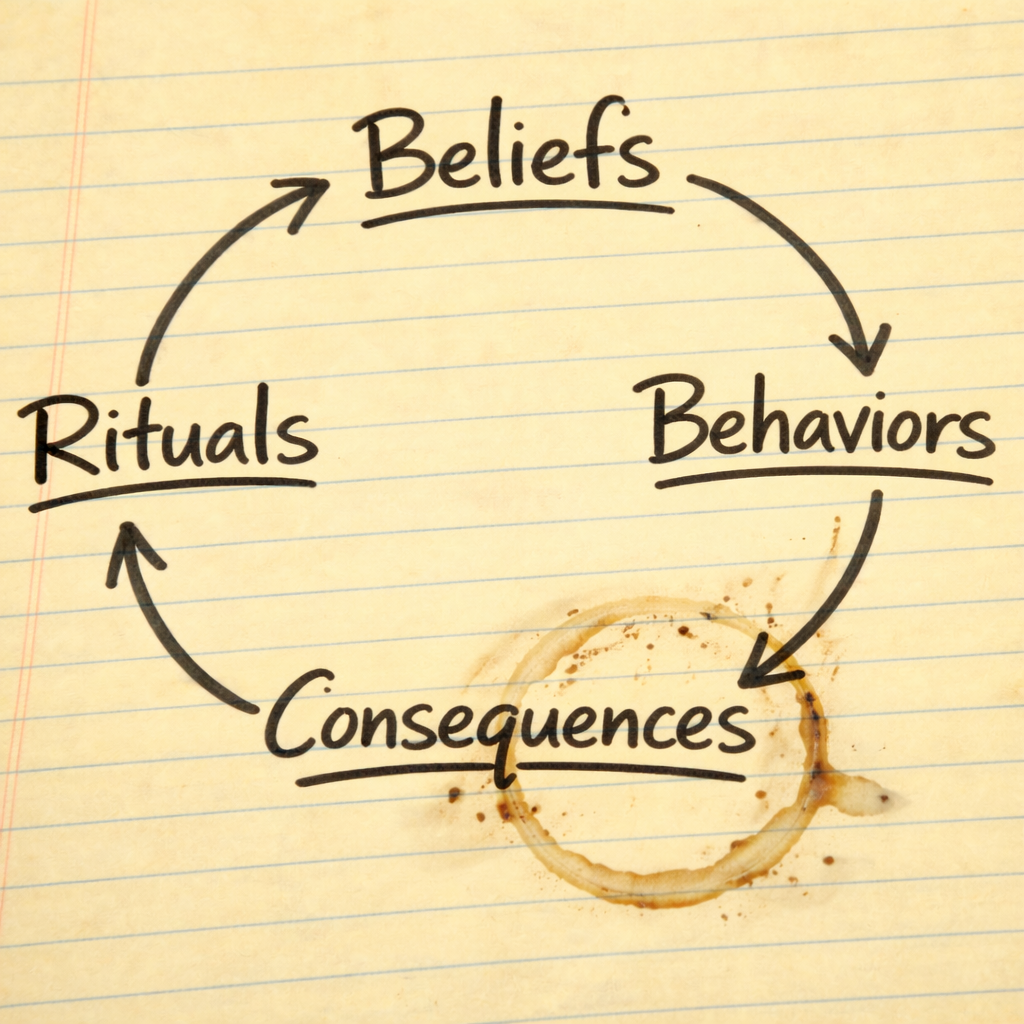
In your book Premeditated Culture, you focus on four elements of a defined culture cycle. I was always taught that the first step for intentional culture is to focus on and define our belief system. That’s where mission and vision statements come from. You seem to jump right to behaviors.
Response:
Beliefs are invisible, assumptions are invisible, the way we see the world is invisible. Even people inside an organization often struggle to describe the beliefs that actually drive their decisions. They can usually recite the mission statement hanging in the lobby, but that’s not necessarily the belief system that governs their work.
Behavior is different. Behavior is observable. I don’t spend much time listening to what organizations say about themselves. I watch what they do.
But even behaviors can be misleading. Some behaviors survive. Others disappear because reality has a way of sorting good ideas from bad ones. The consequences of our decisions determine which behaviors become habits and which are abandoned.
The behaviors that survive become customs and rituals. We repeat them. We tell stories about them. We celebrate them. We teach them to new employees.
Eventually those rituals reinforce the very beliefs that produced the behaviors in the first place.
The culture cycle begins with beliefs. But culture analysis begins with behaviors.
If you want to understand an organization’s culture, don’t start with its mission statement. Start by watching what management consistently rewards, tolerates, and repeats.
Everything else follows.
I also find it useful to suggest hypotheses that might explain the behaviors, then check them by watching the loop over time. I’m frequently right on my inferrences, occasionally wrong and try to keep an open mind. Sometimes the beliefs change without ever being exposed or shared. You can see that by changed behaviors. Then, to your point, Tom, we never needed to know the starting belief state. This is why I have Core Actions instead of Core Values. We all see the actions. If the actions fit in, the beliefs won’t be far behind. If the actions are non-compliant, that’s a job for accountability discussions.